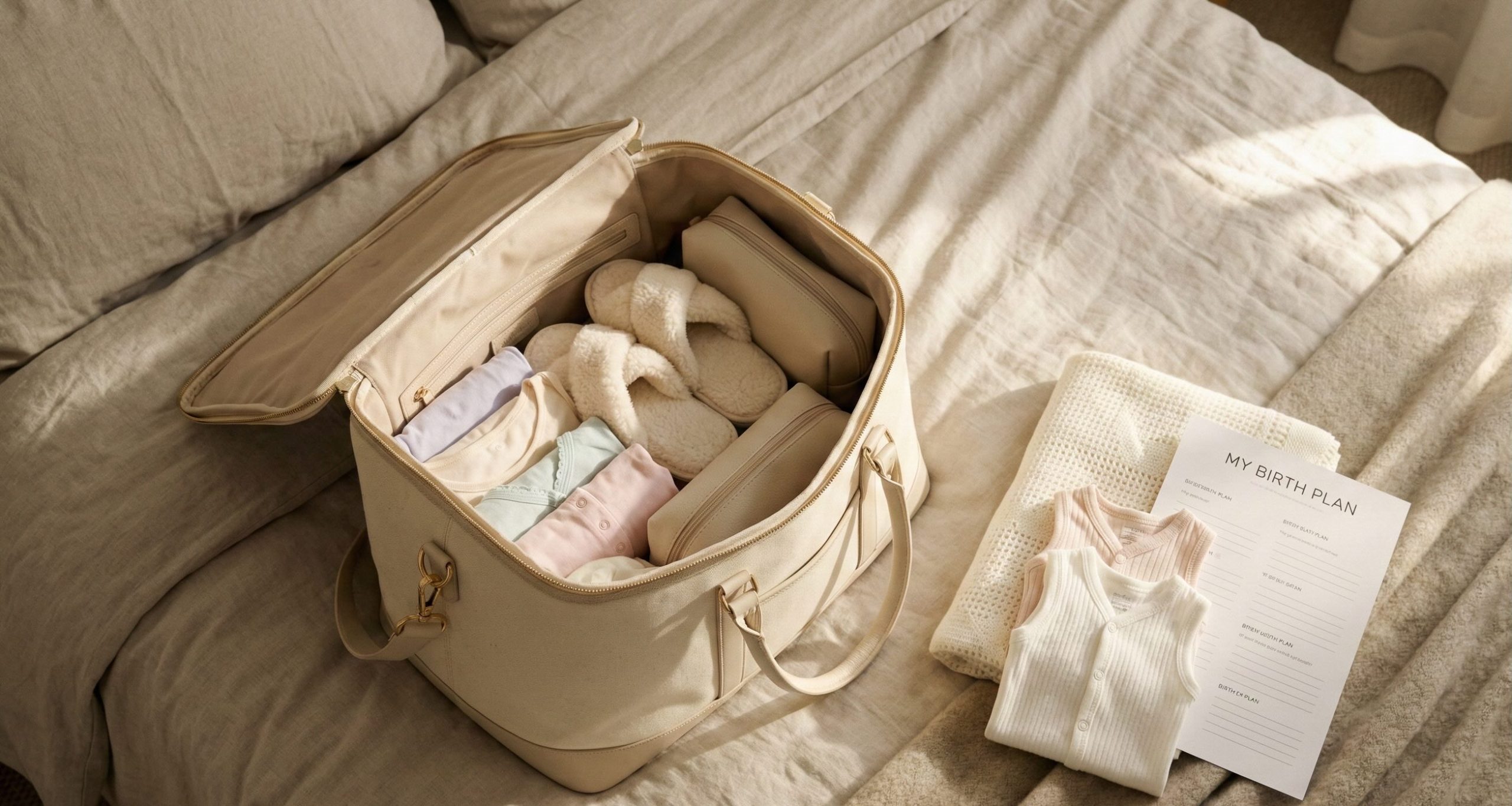
Sleepless nights are a common experience in pregnancy. The reasons vary: back pain, heartburn, constant trips to the bathroom… and that lingering reminder that you need to pack your hospital bag.
The NHS recommends having your hospital bag packed by around 36 weeks of pregnancy so you’re ready for labour and birth, which can help you feel more prepared and reduce stress.
Creating the perfect bag checklist doesn’t have to be overwhelming. With a bit of planning and the right essentials, you’ll feel confident and ready for this incredible journey. Let’s walk through everything you need to pack for a comfortable hospital stay.
For labour and delivery
When labour begins, comfort is everything.
Pack several comfortable nighties or oversized t-shirts that you don’t mind getting messy – labour can be unpredictable, and you’ll want something soft and familiar. Front-opening options are ideal if you’re planning to breastfeed.
Don’t forget a comfortable dressing gown and non-slip slippers with good grip for walking the corridors during early labour.
Your comfort kit should include hair ties to keep your hair out of your face, lip balm (hospitals can be quite dry), and any personal items that bring you peace – perhaps a favourite pillow from home or a playlist of calming music.
Pack your birth plan copies, along with all your maternity notes, insurance details, and any medications you’re currently taking. Midwives recommend bringing phone chargers and a portable battery pack as partners often forget that labour can last many hours, and staying connected with family becomes incredibly important during this time.
Post-delivery recovery essentials
Pack several pairs of comfortable, disposable or old underwear – the type you won’t mind throwing away. Many mums swear by high-waisted options that won’t irritate a caesarean scar if needed. Bring your own maternity pads, as these tend to be more comfortable than hospital-provided options.
Nursing bras are essential, even if you’re not planning to breastfeed initially. Pack at least two well-fitted ones – your body will change significantly after delivery, so consider getting professionally fitted around 36 weeks.
Breast pads will prevent any embarrassing leaks, and if you’re planning to breastfeed, nipple cream can be a lifesaver.
Don’t forget practical toiletries: your own shampoo, conditioner, toothbrush, toothpaste, and any skincare products that make you feel human again. A gentle, fragrance-free shower gel is ideal for sensitive post-delivery skin.
Research shows that new mothers who have familiar comfort items recover more quickly and report higher satisfaction with their hospital experience. Consider packing your favourite tea bags, healthy snacks (think nuts, dried fruit, or energy bars), and perhaps some treats for your partner and the midwifery team.
Baby’s first wardrobe and essentials
Your little one’s checklist is surprisingly simple, but every item matters for those precious first days.
Pack baby clothes in two sizes – newborn and 0-3 months. You never know how big your baby will be, and it’s better to be prepared. Include several vests, sleepsuits, a going-home outfit, and a warm cardigan or jacket depending on the season. Scratch mittens are essential to prevent your baby from scratching their delicate skin.
Don’t forget nappies (newborn size), cotton wool, and gentle baby wipes. While hospitals provide basic supplies, having your own chosen brands can be reassuring. Pack a soft cellular blanket for extra warmth and comfort.
Most importantly, ensure you have a properly fitted car seat installed and ready for the journey home. Hospitals won’t discharge you without one, and it’s worth having it professionally checked before your due date.
Final details for peace of mind
Creating your hospital bag checklist is about preparing mentally for one of life’s most significant moments. Consider packing two bags: a small one with immediate labour essentials, and a larger one with everything else that your partner can bring later.
Remember, every birth experience is unique, and flexibility is key. While this hospital bag checklist covers all the essentials, don’t stress if you forget something – hospitals are well-equipped, and most items can be purchased or provided if needed.
Trust yourself, trust your preparation, and remember that soon you’ll be holding your beautiful baby.