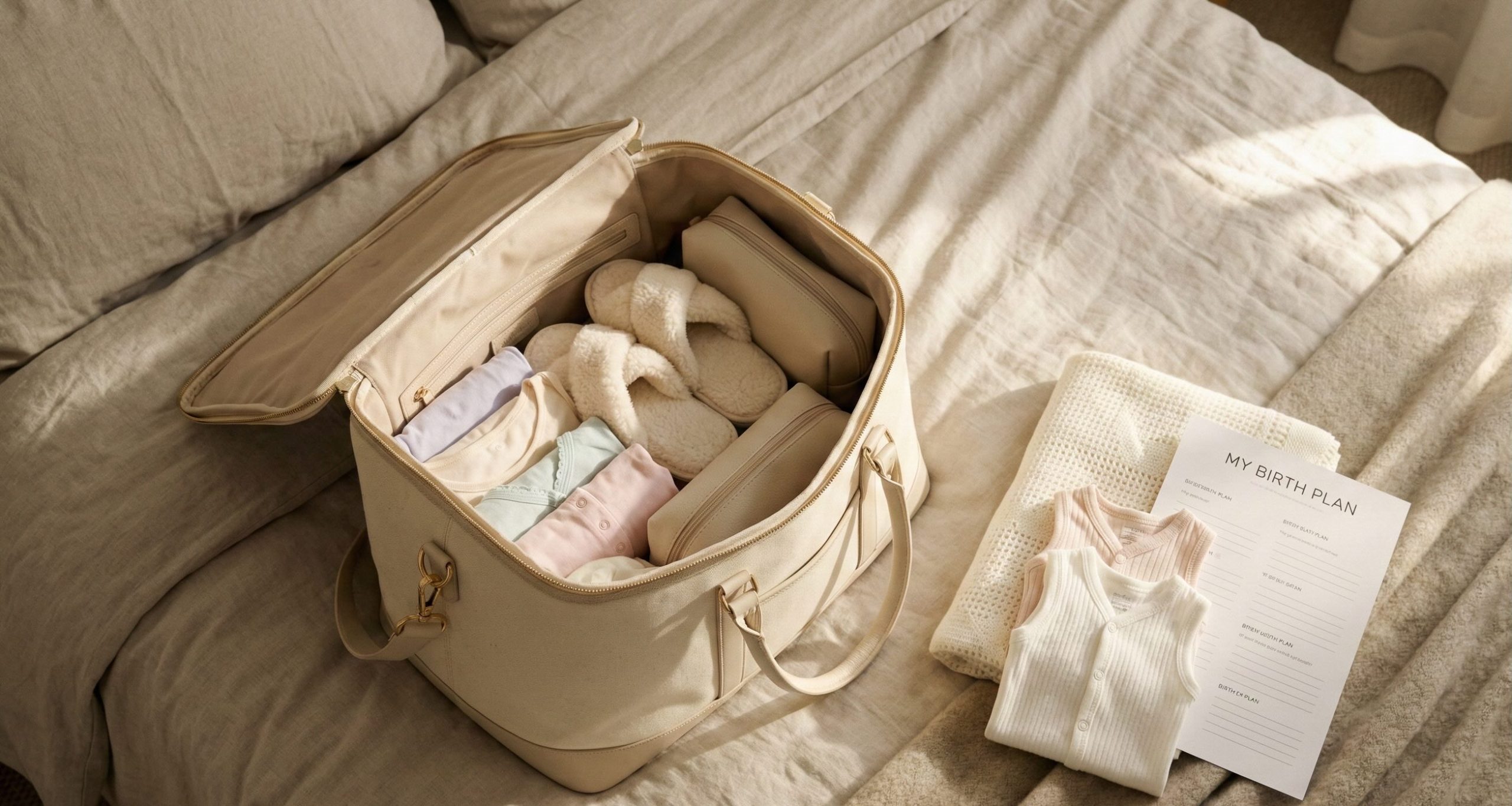
If you’ve been scrolling on Instagram throughout your pregnancy, chances are your feed is flooded with perfectly curated postpartum recovery kits. Silk robes, fancy teas, and price tags that make your eyes water.
But whilst these kits look divine, they often miss the mark on what your body actually needs during those crucial first weeks after birth.
Let’s cut through the aesthetic appeal and focus on building a postpartum recovery kit that prioritises genuine healing, comfort, and practical support over pretty packaging.
The Insta-illusion: pretty but impractical
Social media has transformed postpartum recovery kits into lifestyle products, complete with matching packaging and aspirational messaging. These curated collections often include items like:
- Expensive herbal teas with unverified benefits
- Luxury bath salts (when you might not be cleared for baths yet)
- Decorative storage boxes that serve no recovery purpose
- Generic wellness products not specific to postpartum needs
Whilst there’s nothing wrong with wanting beautiful things during recovery, these kits frequently overlook the unglamorous but essential items that actually support healing.
Dr Sarah Johnson, a consultant obstetrician, notes: “The most effective postpartum recovery focuses on practical comfort measures and proper wound care – not on products that simply look good on camera.”
The reality is that effective postpartum recovery kits should address the physical challenges you’ll face: perineal healing, breast tenderness, sleep deprivation, and the general discomfort that comes with your body’s remarkable transition back to its pre-pregnancy state.
What belongs in a postpartum recovery kit
Here’s what healthcare professionals actually recommend:
For physical comfort:
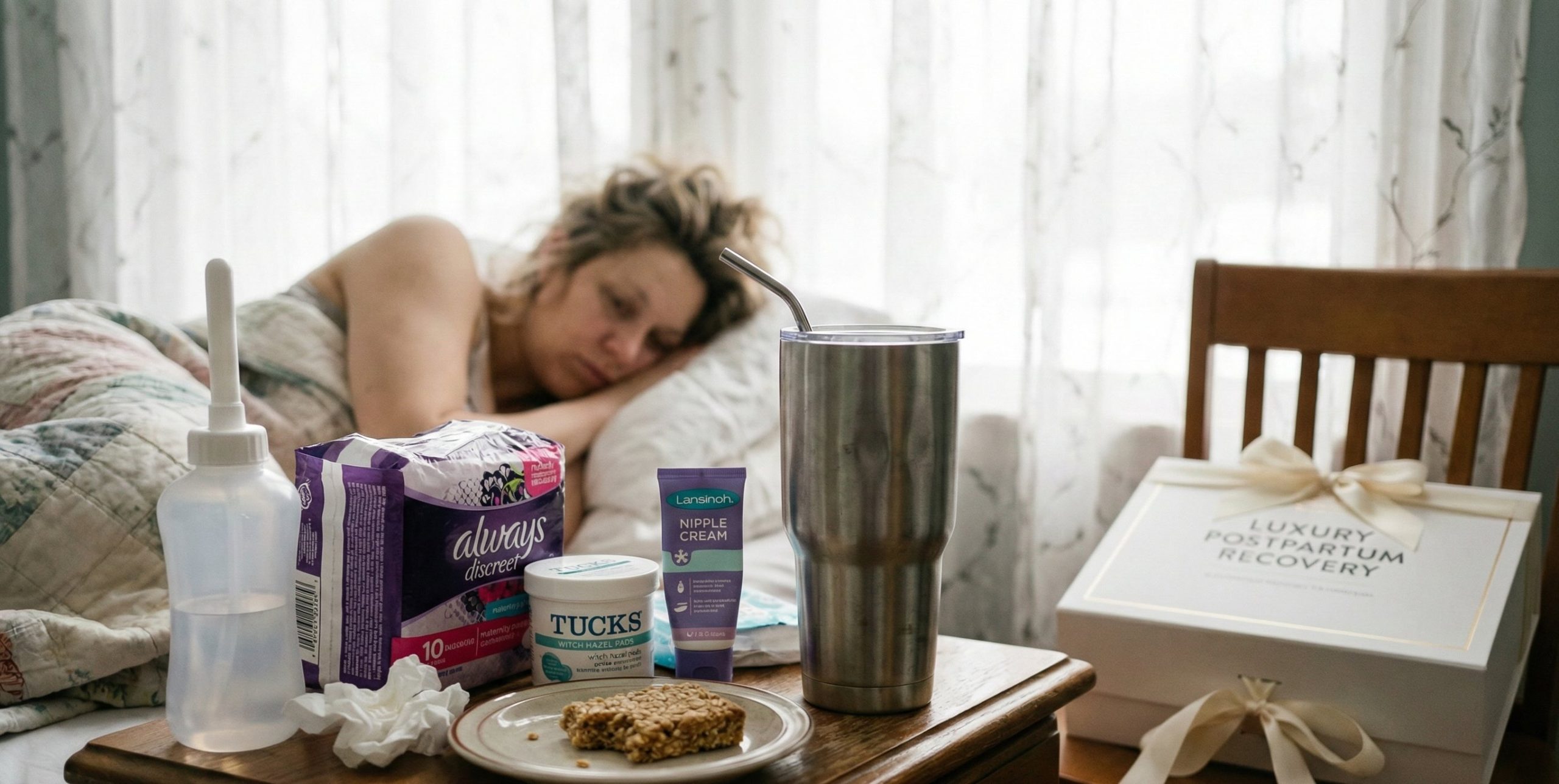
- High-quality maternity pads (not regular sanitary towels)
- Disposable mesh knickers or comfortable cotton ones you don’t mind discarding
- Peri bottles for gentle cleansing
- Witch hazel pads for soothing relief
- Breast pads and nipple cream if breastfeeding
For practical support:
- Easy-access nursing tops or button-front pyjamas
- A supportive pillow for feeding sessions
- Healthy snacks that can be eaten one-handed
- A large water bottle with a straw
- Basic pain relief (as recommended by your healthcare provider)
Research from the Royal College of Obstetricians and Gynaecologists emphasises that postpartum recovery is highly individual, but certain comfort measures consistently help most women heal more comfortably.
The key is focusing on items that address your specific birth experience and recovery needs rather than following a one-size-fits-all approach.
Building your recovery kit
The most effective postpartum recovery kits are tailored to your circumstances. Consider your birth plan, feeding intentions, and personal comfort preferences when assembling your kit.
Start with the basics three to four weeks before your due date. Include items for different scenarios: you might need different supplies depending on whether you have a vaginal delivery or c-section. Don’t forget to prepare a smaller kit for your hospital bag and a more comprehensive one for home recovery.
Consider enlisting help from your partner or a close friend to assemble your kit. They can handle the practical shopping whilst you focus on rest and preparation. Remember, the goal is to support your body’s incredible healing process with genuine care and comfort.
Recovery that works
Your postpartum recovery deserves more than pretty packaging and social media appeal. By focusing on evidence-based comfort measures and practical support, you’re investing in genuine healing rather than aesthetic appeal.
Remember, every woman’s recovery journey is unique. What works beautifully for someone else might not suit your needs, and that’s perfectly normal. Trust your instincts, listen to your healthcare providers, and prioritise function over form when building your postpartum recovery kit.
Your recovery isn’t a performance for social media – it’s a deeply personal journey that deserves authentic support.